Worked example
A hotel investor presentation example: film and stills from Tidecourt
Use the film to introduce the destination, then return to individual images as you explain the concept. This worked example uses Tidecourt, Predella’s self-initiated fictional coastal resort. It demonstrates the visual part of a presentation, not a complete investment deck or a real fundraising result.
1. Open with the destination film
Introduce the project and the purpose of the meeting before pressing play. The 75-second Tidecourt film brings architecture, rooms and coastal life into one visual story. Afterward, pause on a still so the audience can ask about a specific space without following a moving image.
Suggested introduction: “Tidecourt is a fictional coastal resort concept. This film introduces the atmosphere and guest experience we are exploring. We will then look at the spaces behind that direction.”
2. Give the resort concept one clear slide
Follow the film with a broad view that lets you discuss the relationship between the buildings, shared water space and coast. Keep the slide copy brief; place the explanation in your spoken notes.
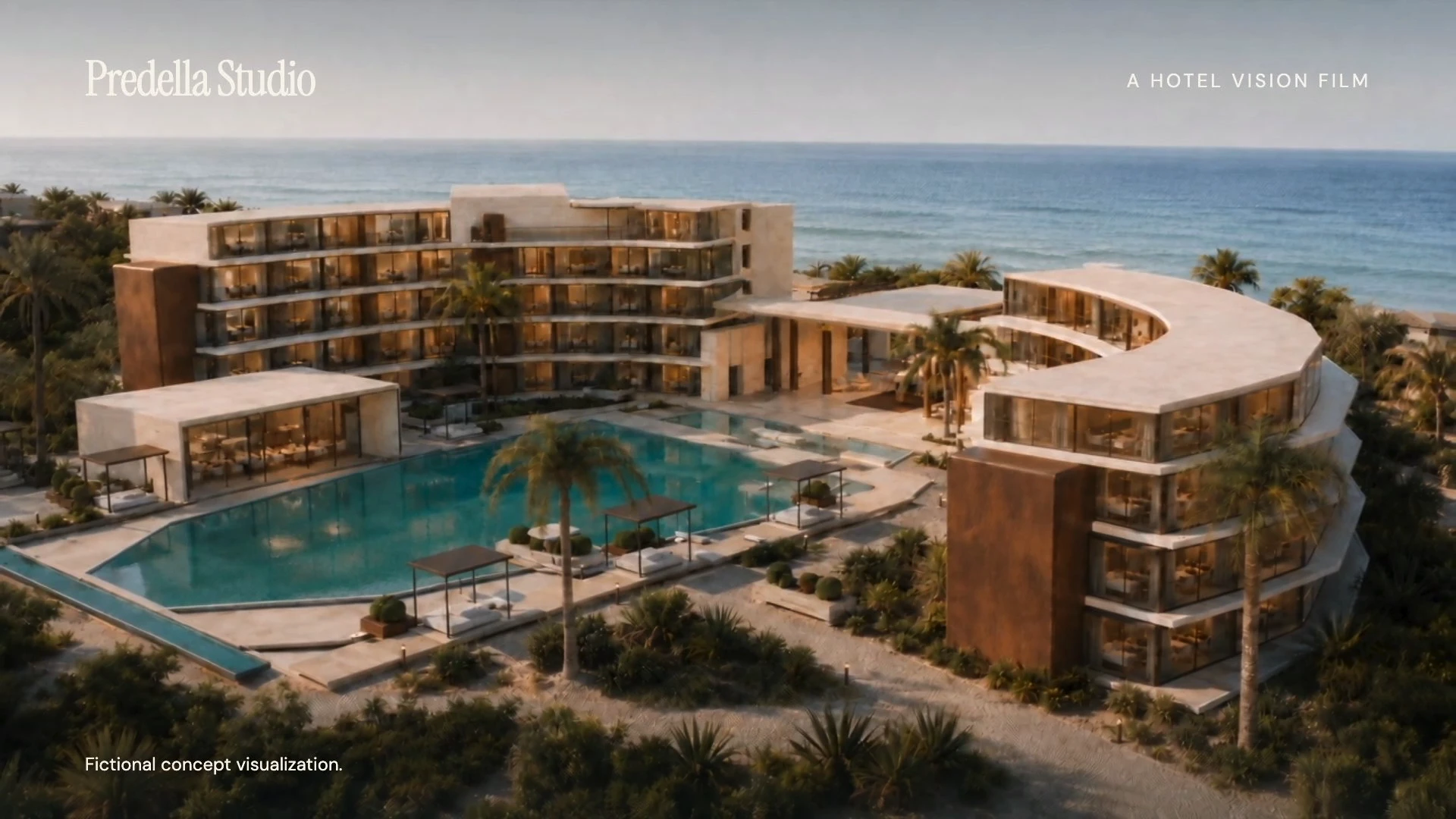
3. Move from the resort to the guest’s viewpoint
A terrace image brings the discussion to a human scale. It can explain the intended connection between a room, outdoor space and the sea. The still has a different job from the broad resort view: it gives the audience a concrete moment to discuss.
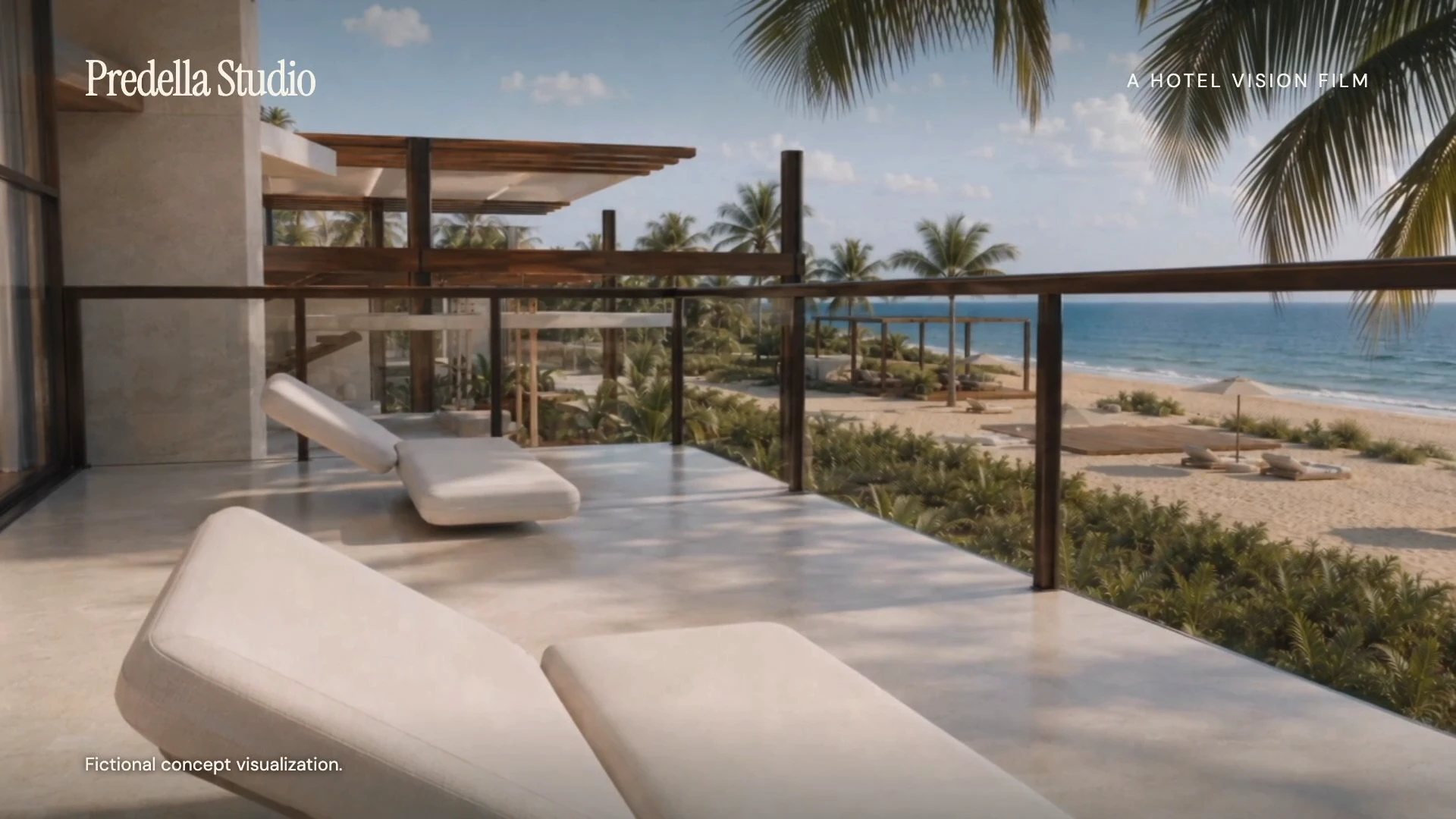
4. Bring a working image into the design discussion
Keep the direct Blender render available when the conversation turns from atmosphere to spatial intention. Showing the working image can help distinguish the modeled starting point from the finished photographic interpretation. It is useful supporting material, even if it stays in the appendix.
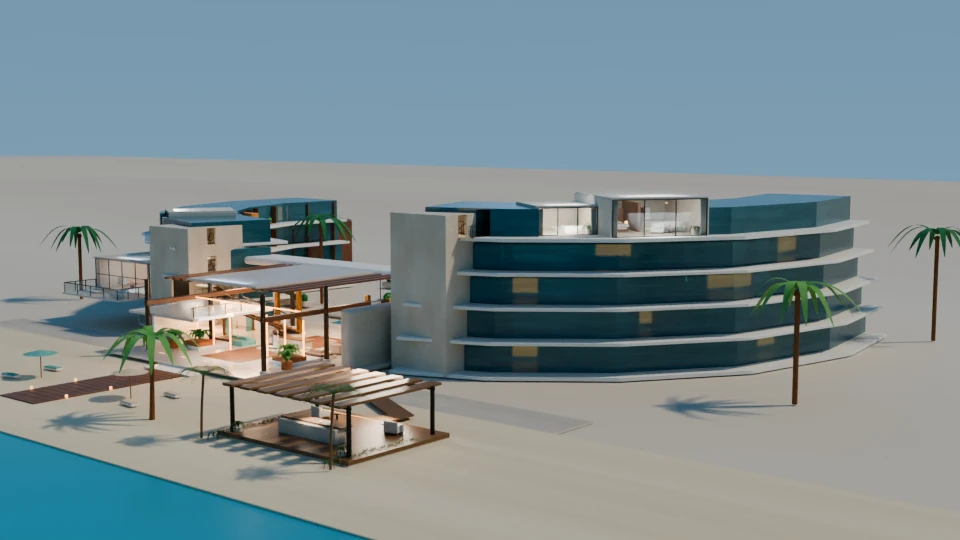
5. Return to the decision and the missing information
After the visual sequence, return to the purpose of the meeting. For this fictional example, the next conversation could be about which spaces deserve further design development and which information is needed to assess the concept. Do not add invented operating figures to make the example feel complete.
A real investor presentation also needs the developer’s verified project information, team, commercial assumptions and proposed next step. Film and imagery support that discussion; they do not replace it.
- Which parts of the guest experience should the team develop further?
- Which design details remain provisional?
- What site, design or commercial information must be supplied next?
- Who will review that information, and what decision follows?
What to brief for your own presentation
Agree which scenes introduce the project and which stills will accompany individual discussion points. Share the presentation format, screen setup, sound requirements and whether the MP4 will be embedded or played separately. Test playback on the actual presentation device and keep a still available if the film cannot play.
Predella’s vision-film package starts from €7,500 and includes a 60–180-second MP4, at least 20 finished images, and direct Blender render images or video sketches. A focused pilot starts from €2,500 with one short sequence and two matching stills. This page uses selected existing Tidecourt assets to illustrate their presentation roles; it is not a sample of every package deliverable.
A complete investor deck, editable presentation files, source models and additional edits are not automatically included. Agree those separately. Plans and drawings are helpful but optional; the brief should identify what is confirmed and where concept exploration is welcome.